

Key Dates
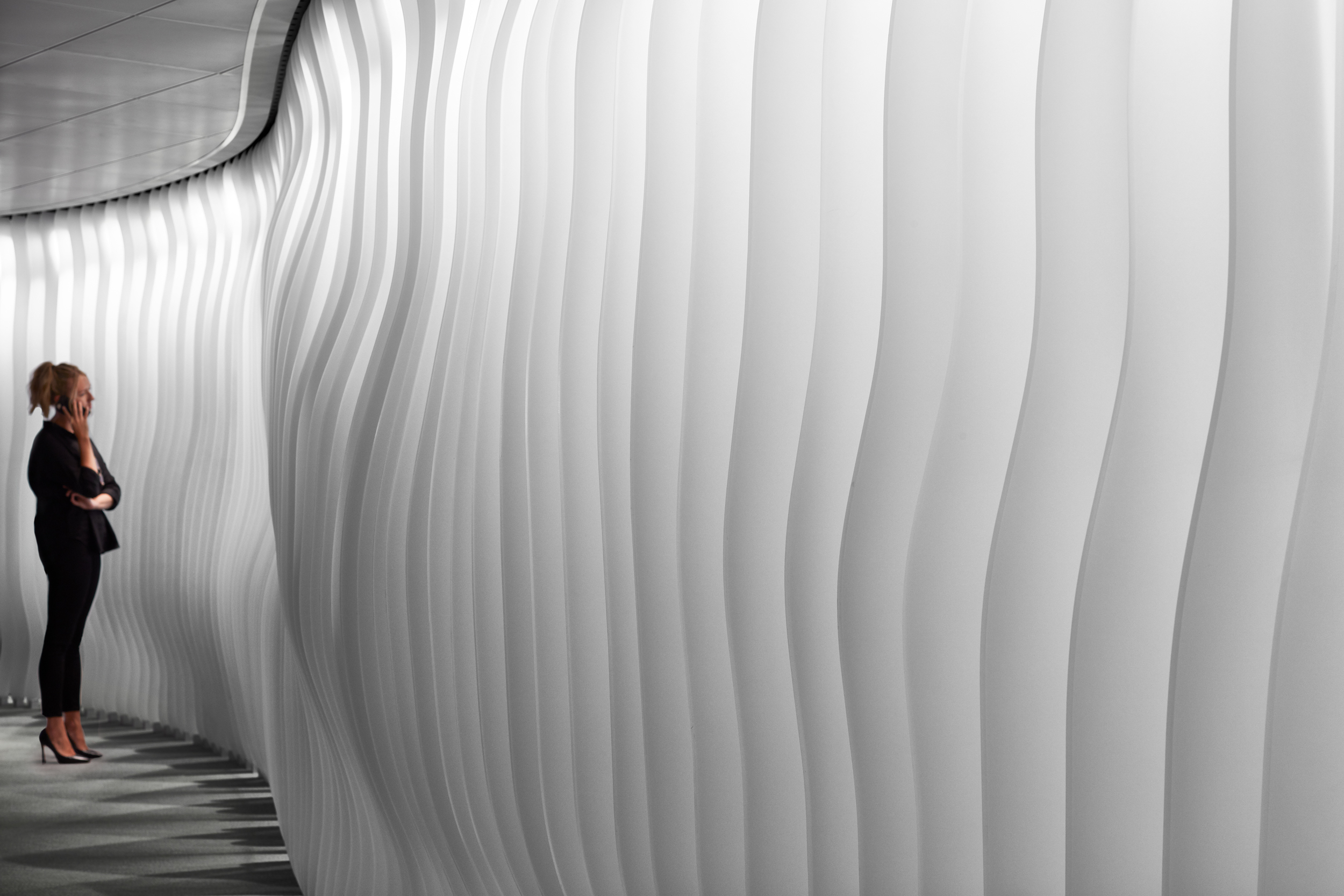
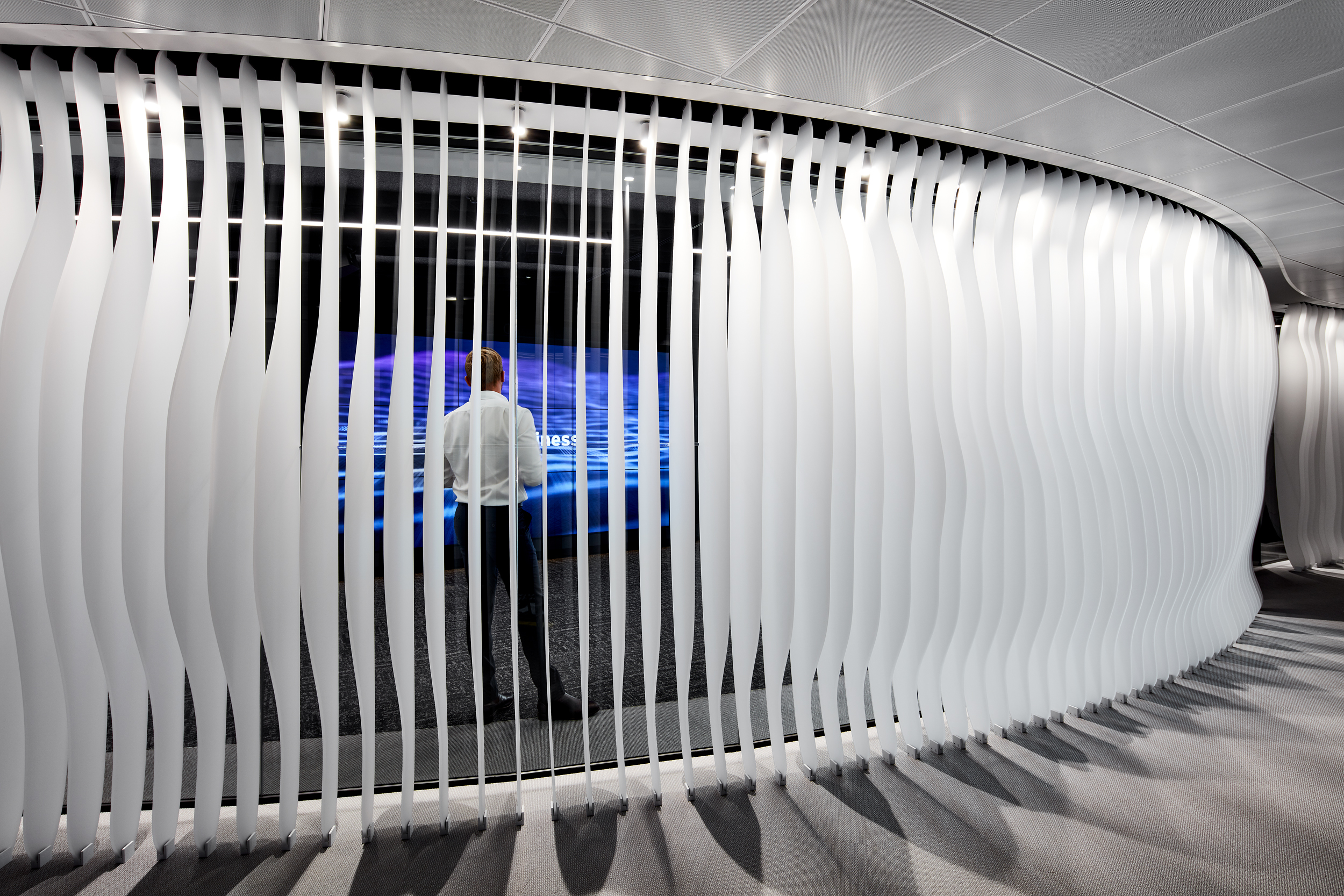
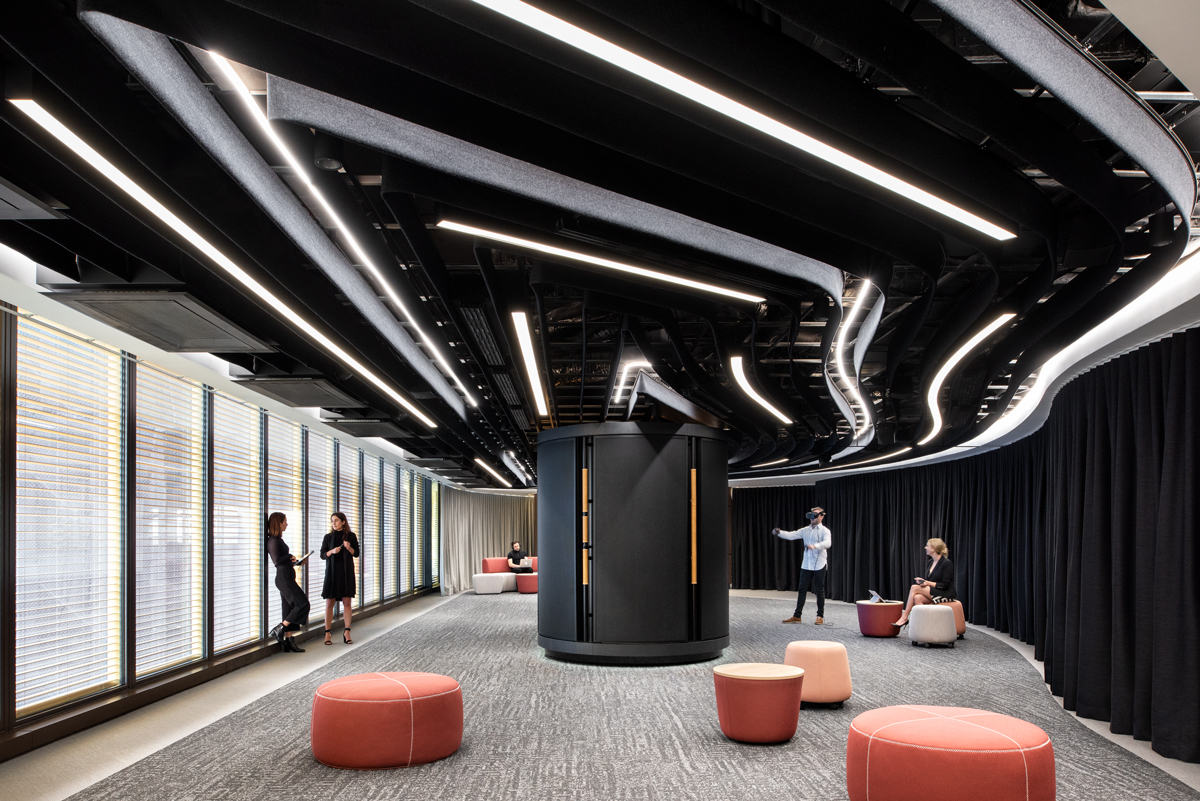
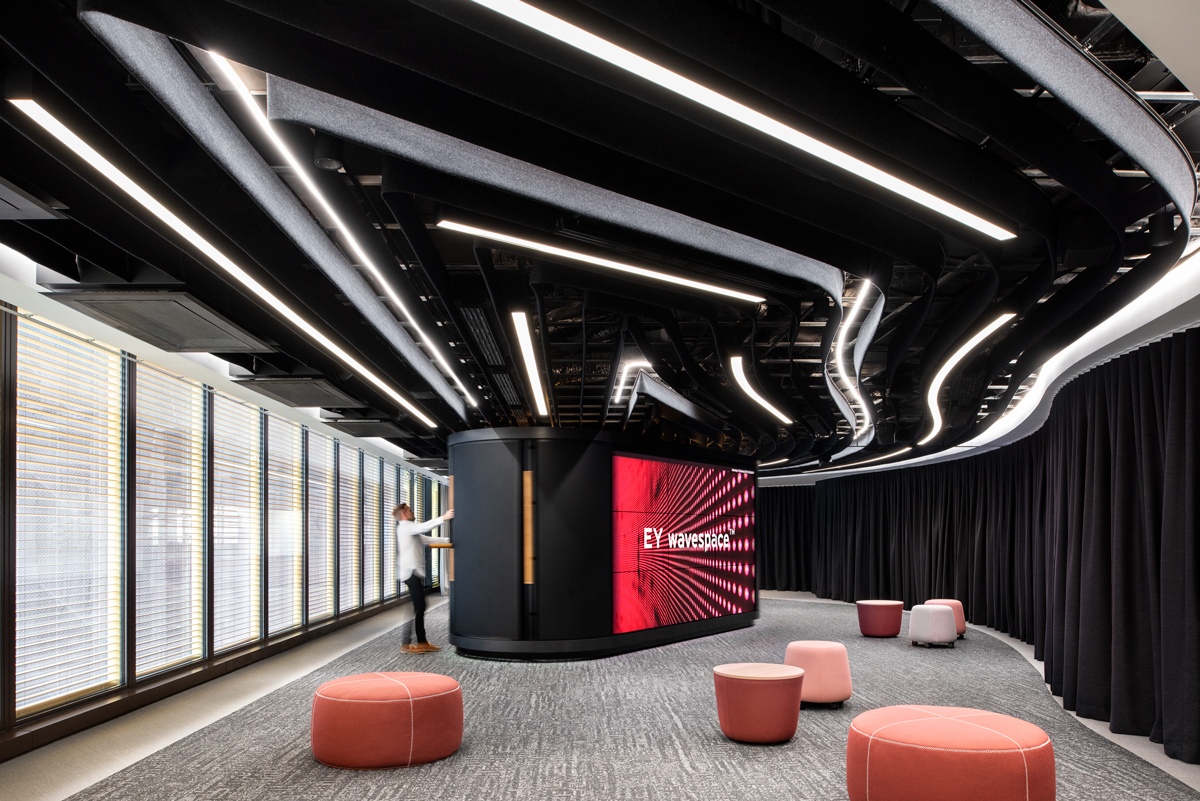
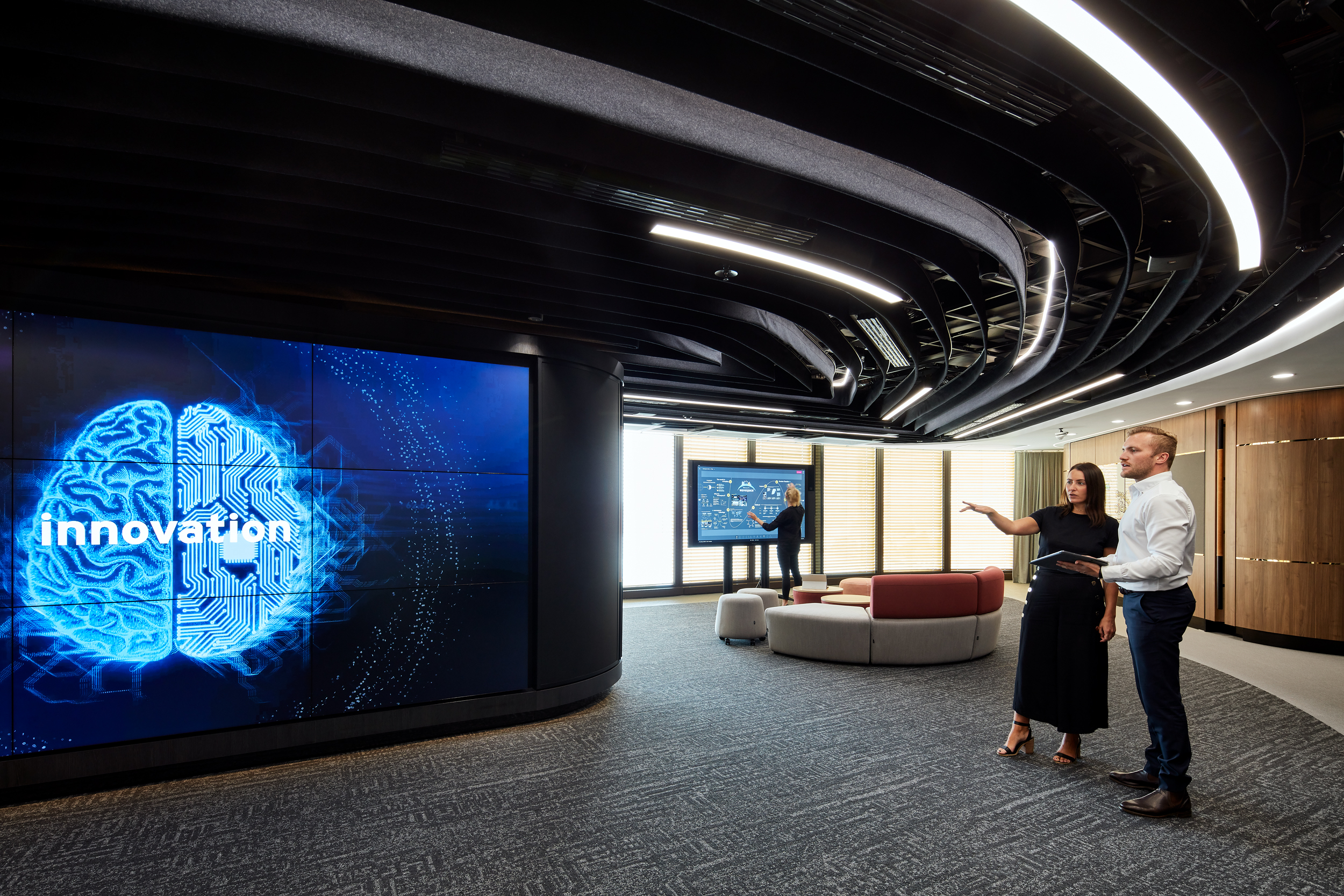
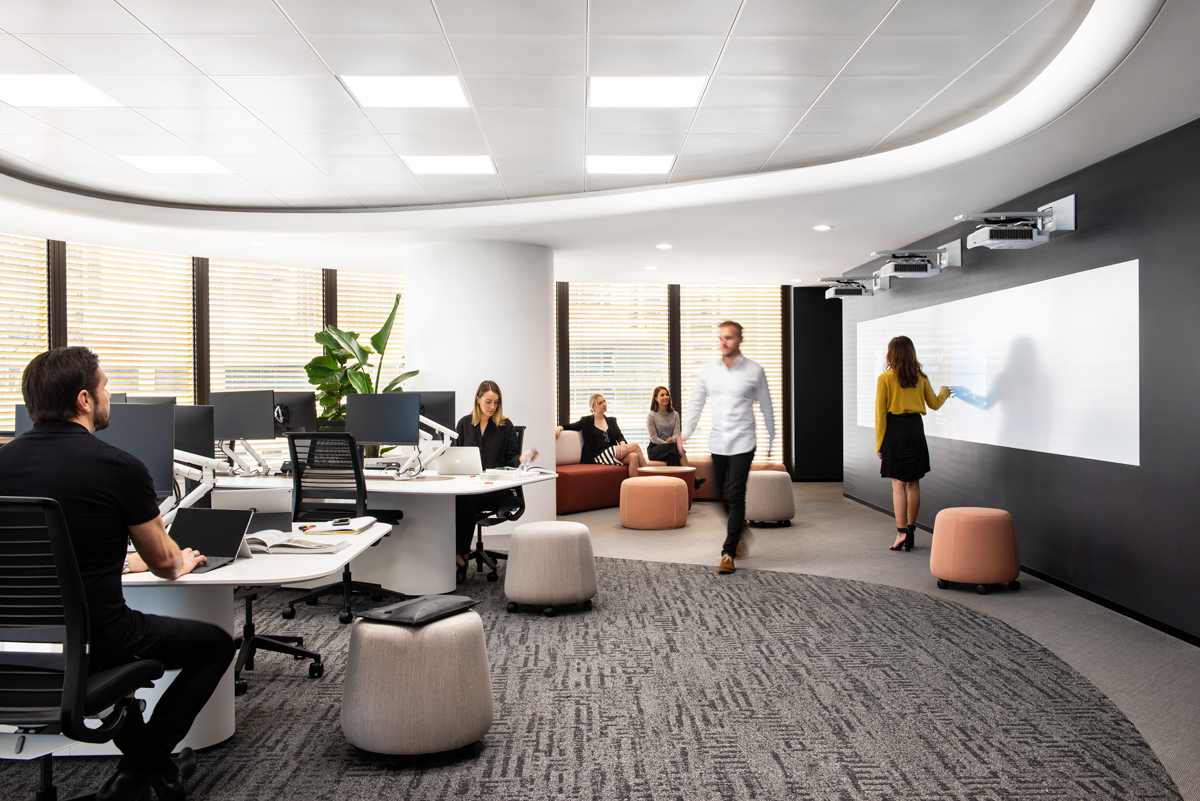
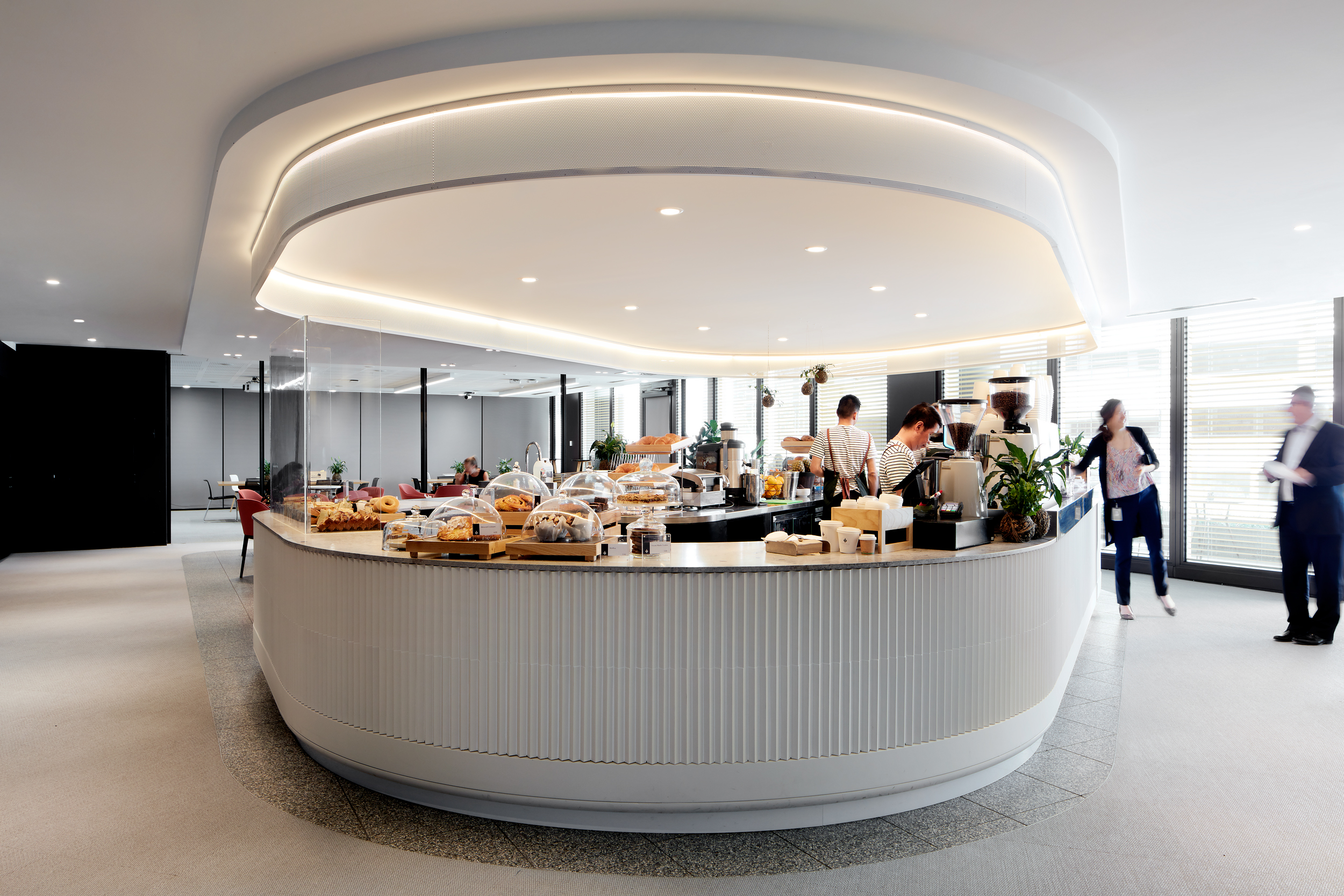
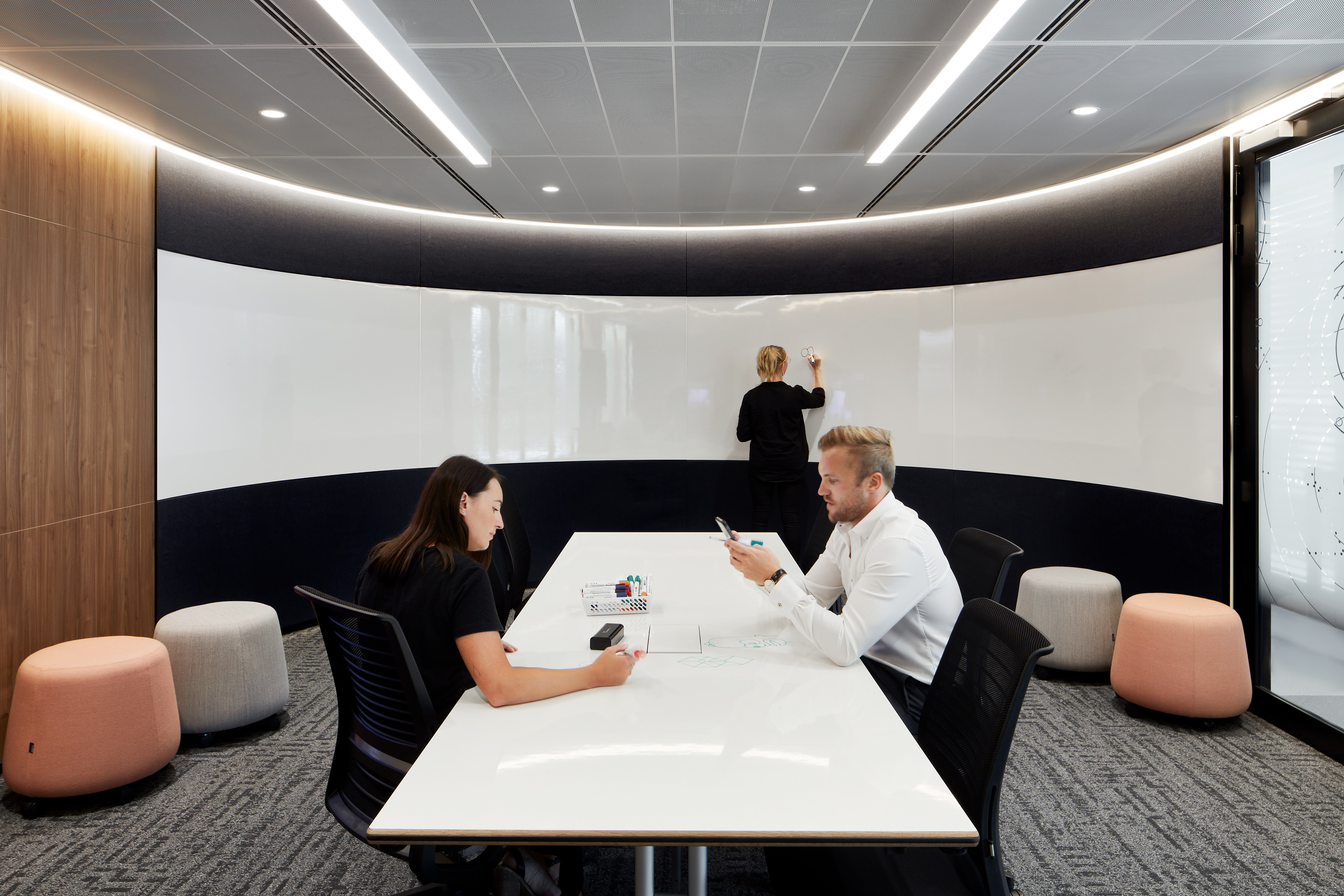
Image Credit : Nicole England &
Luc Remond

Project Commissioner
Project Creator
Project Overview
Wavespace Informs the Future
As the business economy shifts into the transformative age, organisations are increasingly seeking to leverage sustainable competitive and differentiated market outcomes. Wavespace facilitates the intersection between people, place and digital technologies – an environment for real-time exploration, experience and business outcomes to differentiate the EY position.
Team
Liam Higginbotham Pablo Albani Emma McGifford Alexis Kotzambasis
Project Brief
The design challenge for GroupGSA was a complex one. How do we unite the environment and create a sense of place, yet provide 5 distinct spaces with separate functions within one compressed floorplate? The base building architecture included an undulating and rounded façade, oversized columns and a floor plate of approximately 1000 square meters.
The success of the space relied heavily on visual connectivity and the interaction of people. With virtually ‘no walls’ in our proposed design we had to be clever with our treatment of the core Wavespace functional brief. With careful consideration given to our spatial planning we quickly identified early on that the base building architectural elements would become clever solutions for back of house functions & support spaces.
By mimicking the façade’s curves and undulation into the design, we were able to naturally inform the geometry of the main zones and subsequent circulation paths. The base building columns then became natural ‘markers’ for separation. These markers evolved into joinery elements that would encase the large concrete columns and take the shape of large pods to house furniture storage & support utilities.
The space will host numerous events for EY clients and the industry more broadly.
Project Innovation/Need
For GroupGSA, it would have been a simple to look at Wavespace as a traditional environment with traditional partitioning.
We strongly felt that physical barriers would impede on ad-hoc collaboration, so chose to minimise barriers with almost no separating walls enhancing visual permeability across the environment and the blending of zones.
The centrepiece is a pivoting digital-wall. This serves two purposes. It provides a dynamic solution to physical separation, dividing showcase arena into two separate functions and allows diversity from a technology perspective. But pivoting the wall at 90degrees unites both areas creating one contiguous space to support large events.
Design Challenge
The physical design needed to work in tandem with technology, yet also be highly flexible, intelligent and modular. This drove a solution intuitive to change and simplistic in application, whilst supporting the ability to continually evoke a changing user experience. We specifically targeted the psychology of many diverse users, disrobing them from traditional thinking and mindsets, to facilitate divergent thinking, and providing areas for confluence bringing the best ideas together for rapid development and prototyping.
We utilised parametric modelling capabilities to inform key design decisions that were directly impacted by live building data. This informed specific geometries and alternating finish applications to zone and segregate teach space.
Taking early conceptual thinking and merging this with tangible data, we modelled key elements such as the ‘Blade Wall’ consisting of 300+ individually laser cut acrylic panels. These panels were then laid out in a specific sequence to influence ‘circadian’ light patterns & sound effects.
Sustainability
In developing the brief for The Wavespace, EY wanted to invest in an environment to support them for a minimum ten and a potential 15-year period of occupancy within 200 George Street, so developing a space which has an inherent ability to evolve without physical change or capital costs, was the driver.
To do this, we acknowledged that the technology application would be a major element in the success of the separation of spaces. This meant that it should be seamless and sometimes invisible.
The physical design needed to work in tandem with the technology, yet also be highly flexible, intelligent and modular. This allowed for a solution that is intuitive to change and simplistic in application, whilst supporting the ability to continually evoke a changing user experience. To be sure, our team included BIM and Parametric design capabilities to demonstrate in real time how this environment has the potential to evolve and change to suit and adapt to audience diversity.
Interior Design - Co-Working & Studio Space
This award celebrates innovative and creative building interiors, with consideration given to space creation and planning, furnishings, finishes, aesthetic presentation and functionality. Consideration also given to space allocation, traffic flow, building services, lighting, fixtures, flooring, colours, furnishings and surface finishes.
More Details