
Image Credit : All photographs - Sonia Mangiapane
Project Commissioner
Project Creator
Project Overview
The history of Silver Top Taxi is synonymous with Melbourne. Within 15 years of the establishment of Melbourne, Joseph Gange established a family business with horse drawn Hansom Cabs which through the historic Astoria Taxi Company was to become today’s Silver Top Taxi. Following a fire, the new Silver Top Headquarters and depot has re-opened at the old Rupert Street Collingwood site.
A state of the art facility designed by local Collingwood architects Baldasso Cortese and built by the Becton Group stands as a testament to Victoria's largest taxi network. The new building, which cost over $10 million to develop and build, houses Silver Tops leading satellite booking technology, enabling them to provide taxis to customers in the quickest time frame.
As a very proud operations manager stated "this is arguably the best taxi network building in the world". And who wouldn't agree - not only does it make a marvellous statement, but has already created efficiencies for both customers and taxi owners. It has also provided a home for Taxi memorabilia collector Kevin Gange to exhibit his collection in what is believed to be Australia's first Taxi Museum.
Team
Project Director - Steven Cortese Project Architect - Martin Gehrckens Design Architect - Dev Mistry Interior Designer - Anastasia Malishev
Project Brief
The brief was to quickly design and construct a new headquarters for Silver Top Taxi after their premises burnt down in 2009. Without this, they could not function. The immediate priority therefore was to quickly agree a brief and get design underway.
The new facility had to meet Silver Top’s objective to provide an excellent work environment for its staff and an improved / impressive corporate image and environment.
The design was for to be restrained yet modern and had to accommodate:
• Taxi inspection, display and car parking areas
• A taxi museum
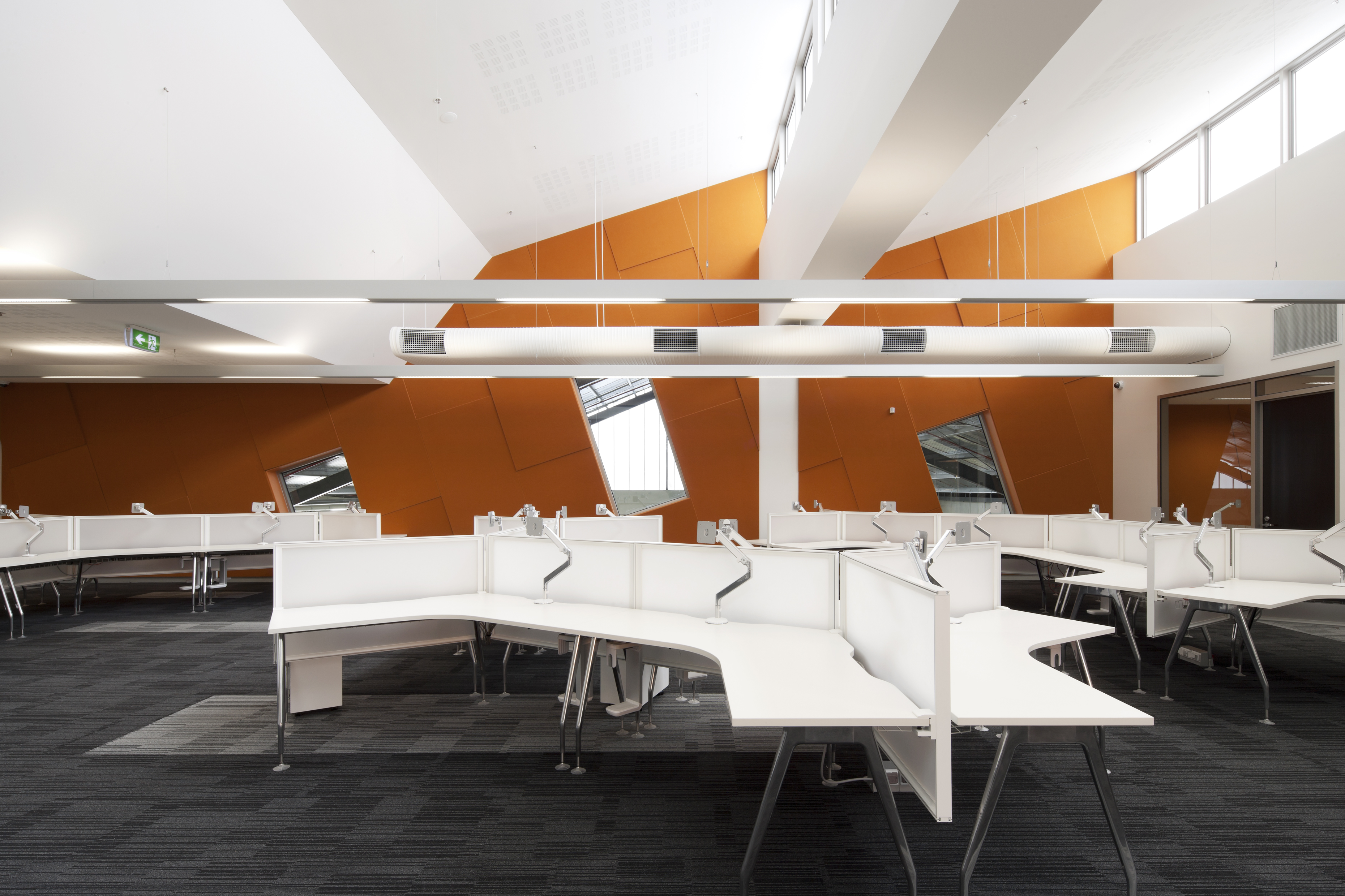
• Administration areas for up to 100 employees
• A State-of-the-Art 24 hour call centre
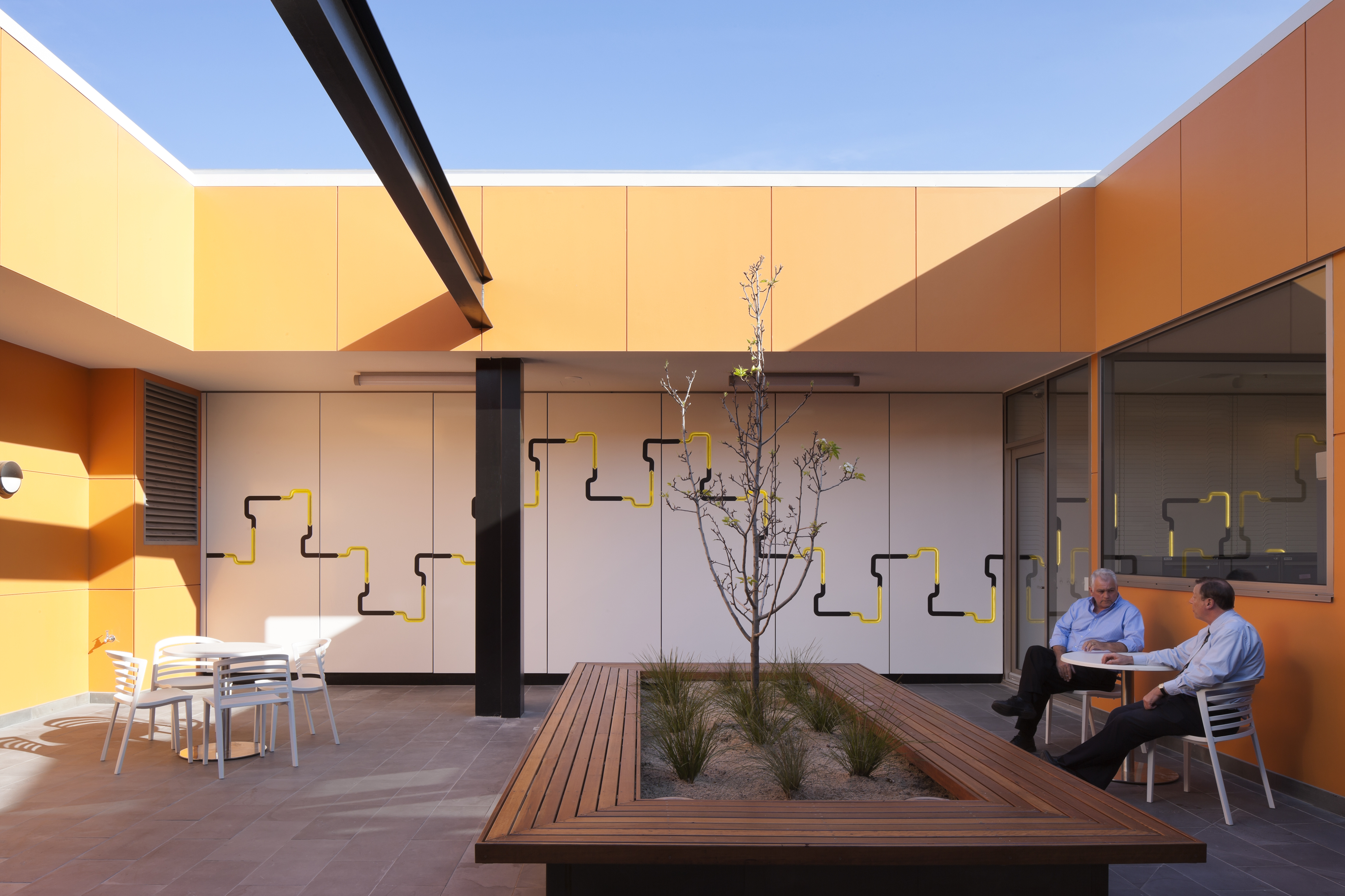
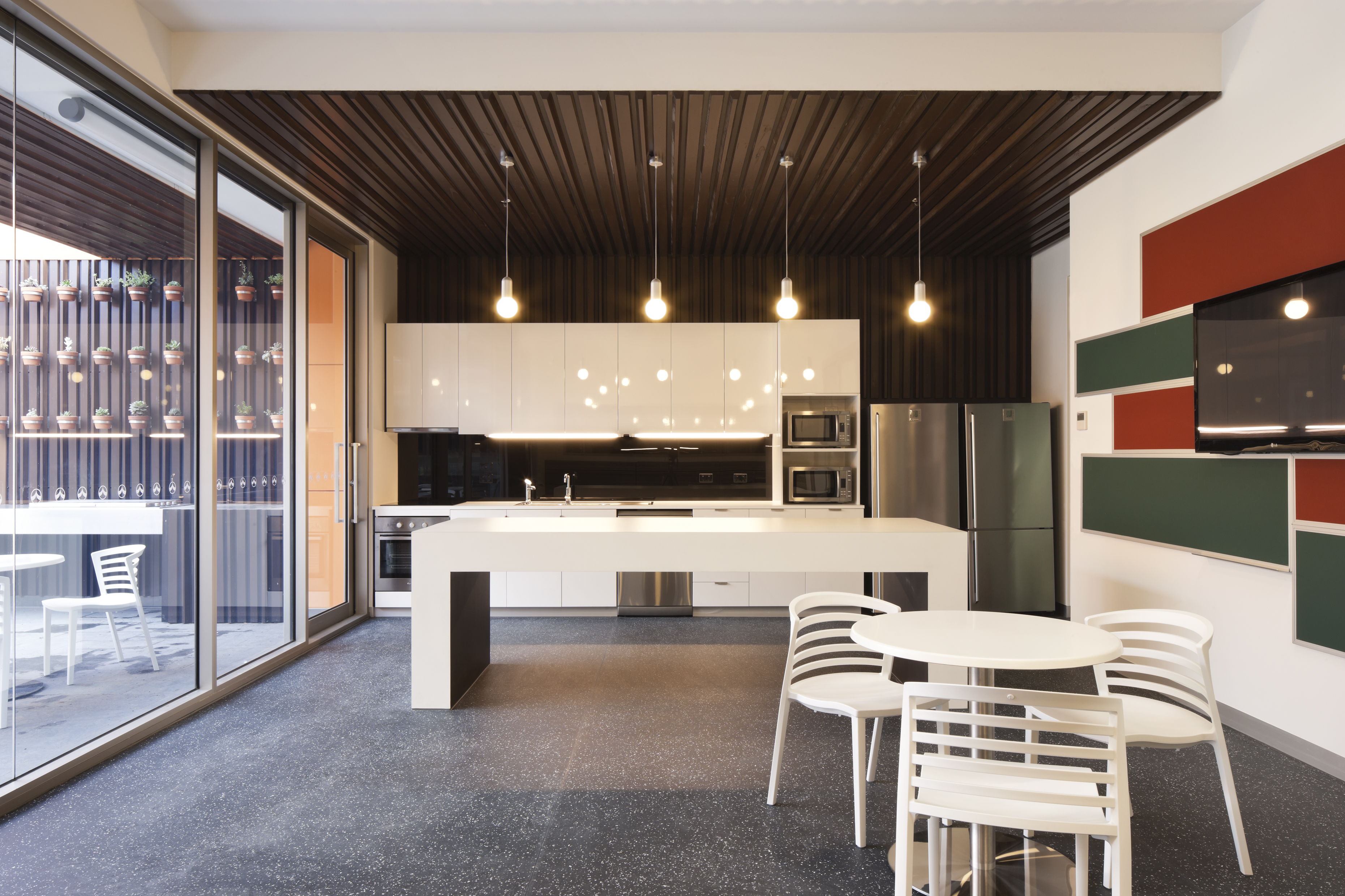
• Staff amenities including kitchen, dining and external courtyard areas
• A taxi driver training facility including simulator area and associated amenities
• General offices for Silver Top management, finance, sales & marketing, and operator services
The Client’s program objective was to have the facilities completed and up and running within 2 years of consultant appointment. From fire to handover took just 25 months.
Project Need
Good public transport is essential In order to maintain Melbourne as one of the most liveable cities in the World. An important part of the city’s public transport system is the role that taxi’s play, particularly to make places accessible where trains and trams cannot reach.
This is where Silver Top Taxi comes in. Their new state of the art headquarters building enables training, a call centre and a hub for drivers all under one roof.
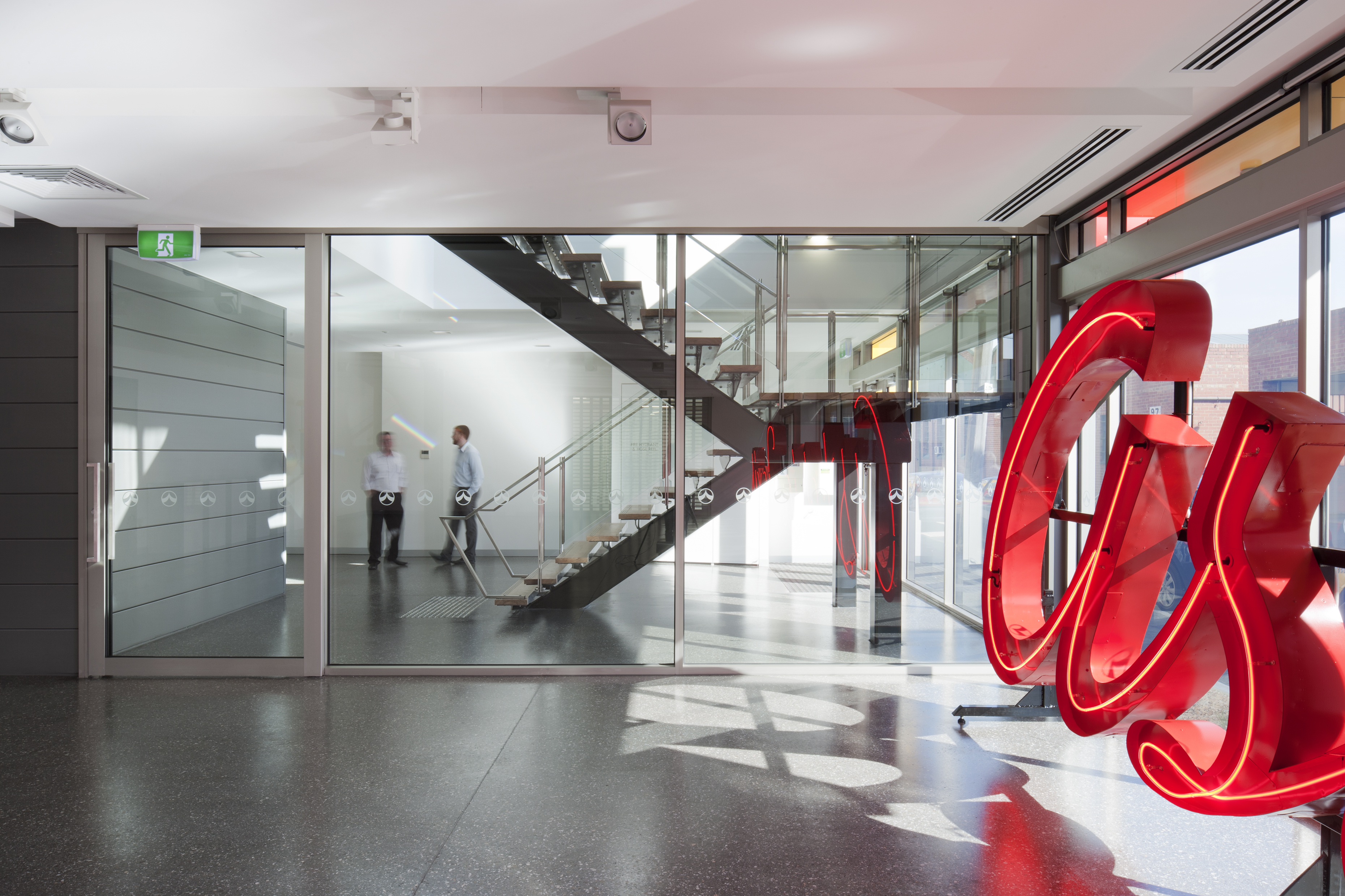
Public & cultural benefits of the new building include the creation of a ground floor taxi showroom / museum to display the client’s collection of heritage vehicles, artefacts and memorabilia.
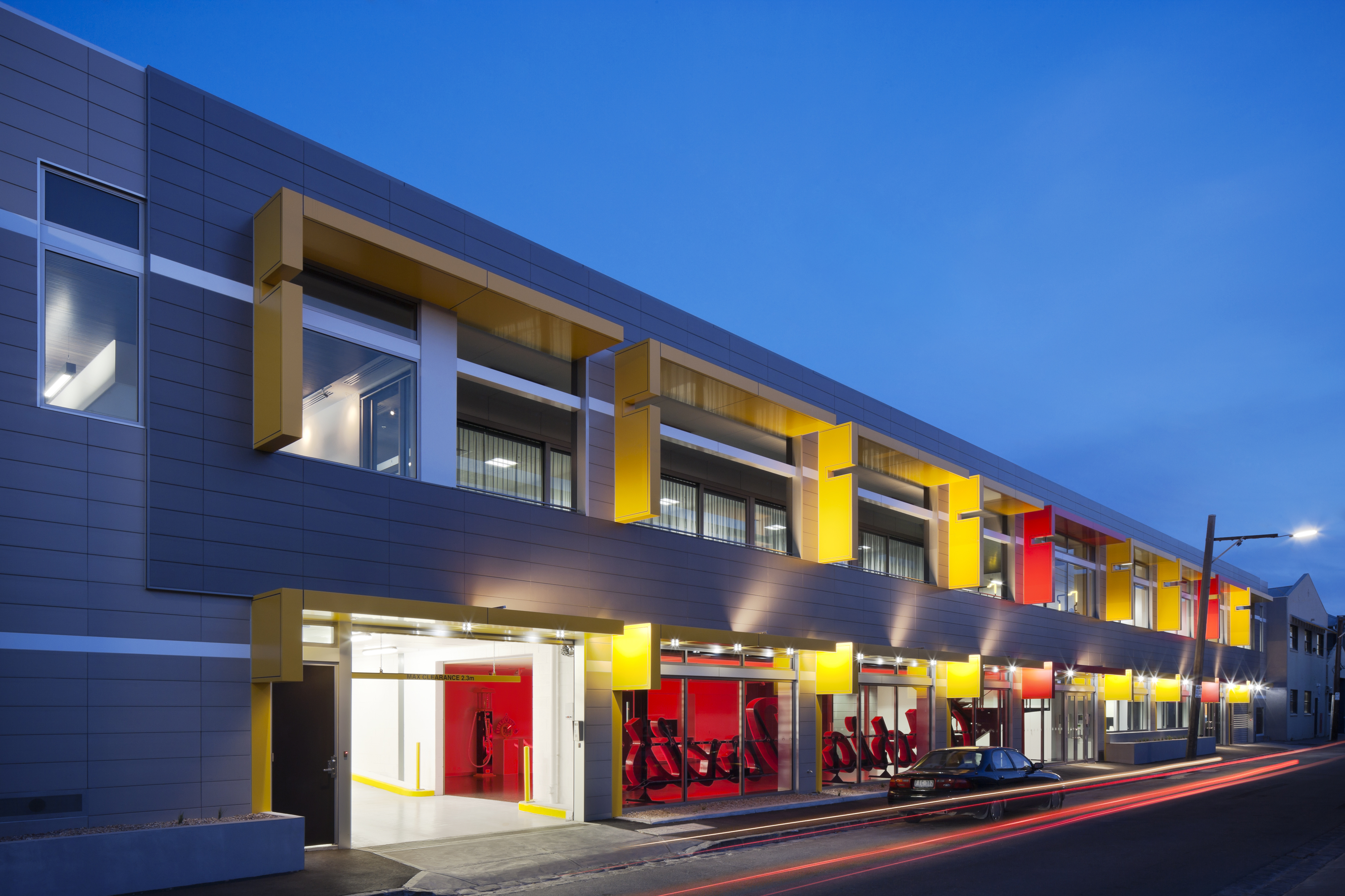
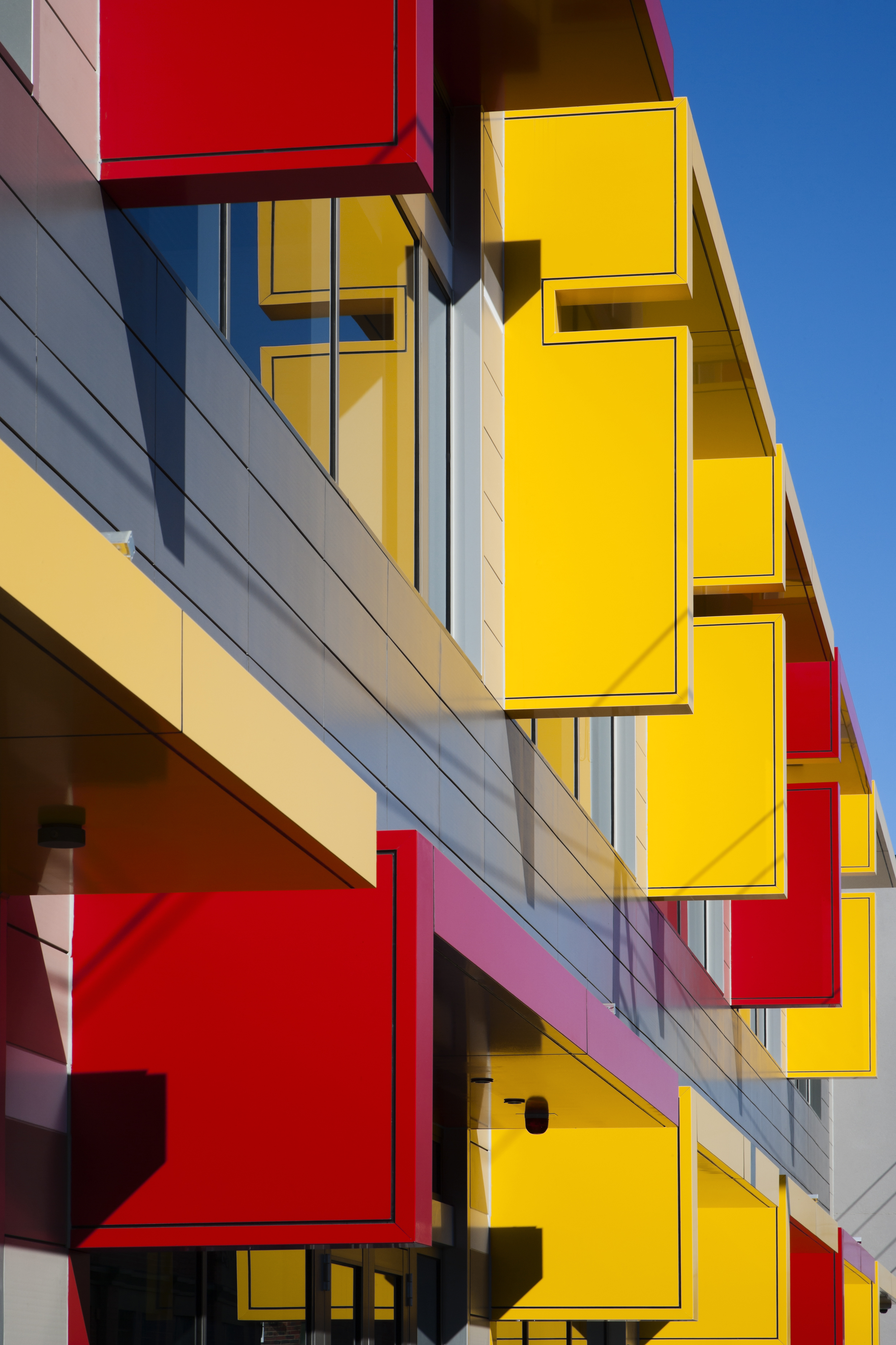
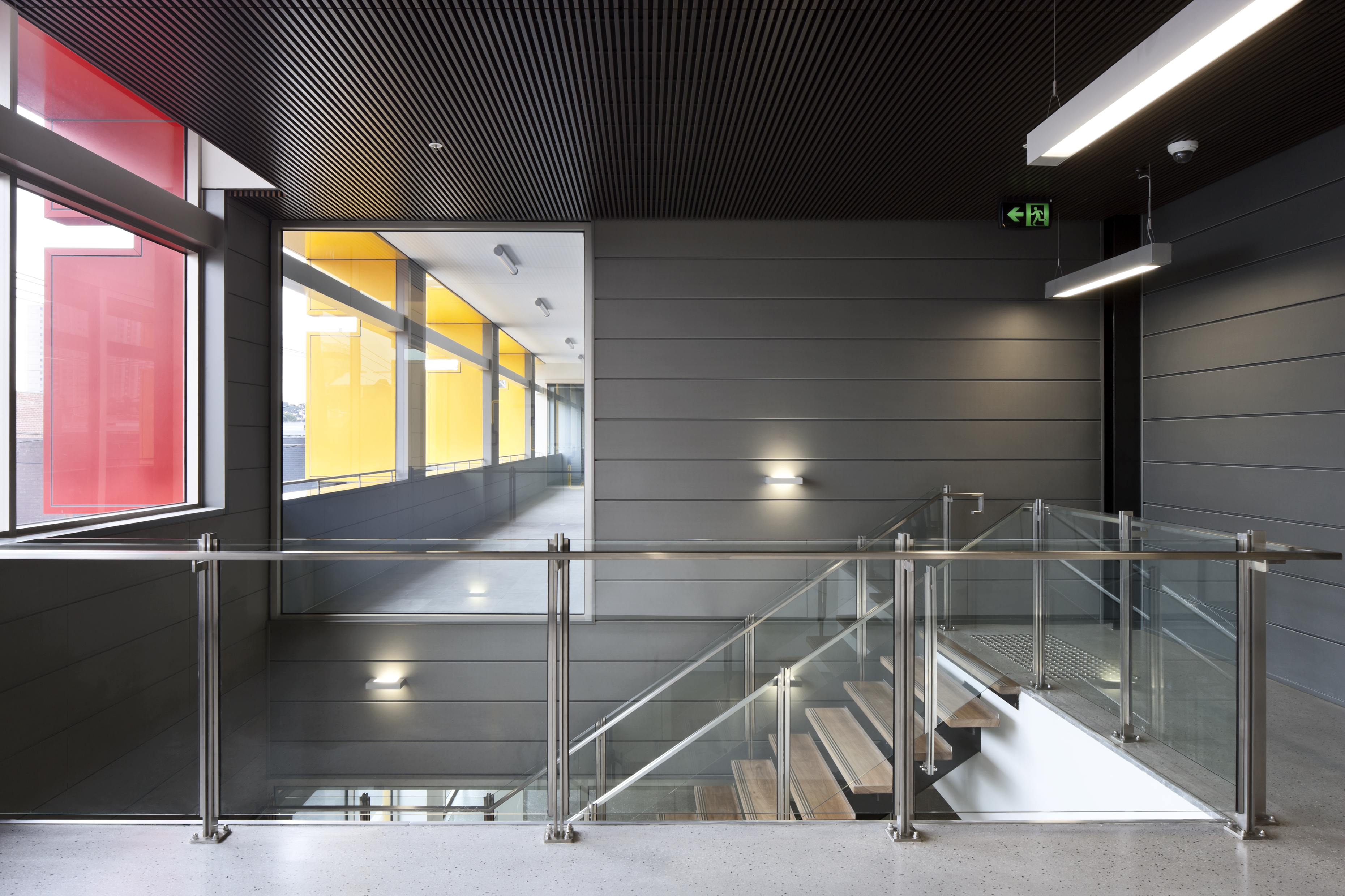
The design plays homage to the works of Jeffrey Smart through the use of repetition and colour creating a strong and bold graphic quality in the design of the façade.
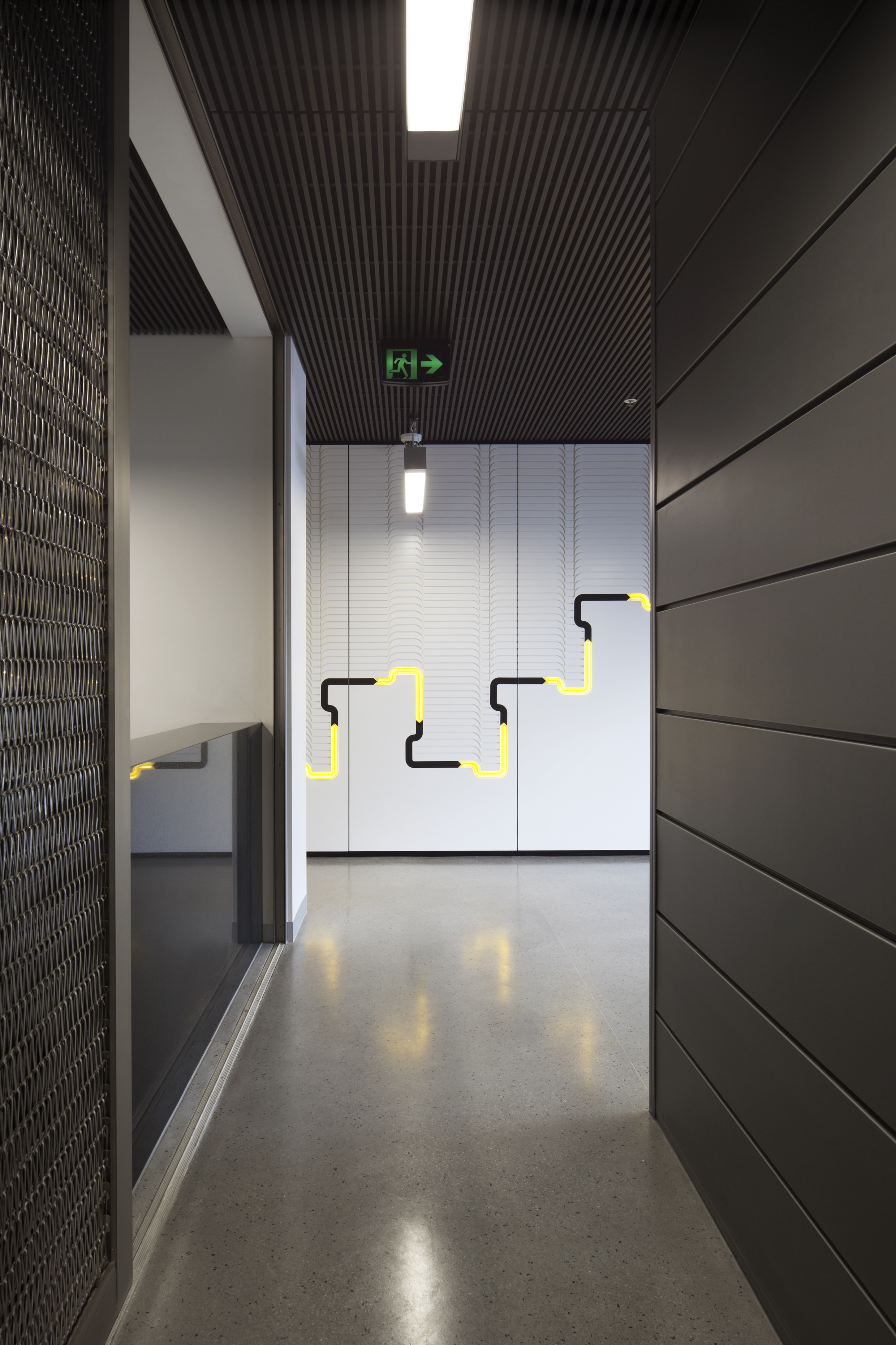
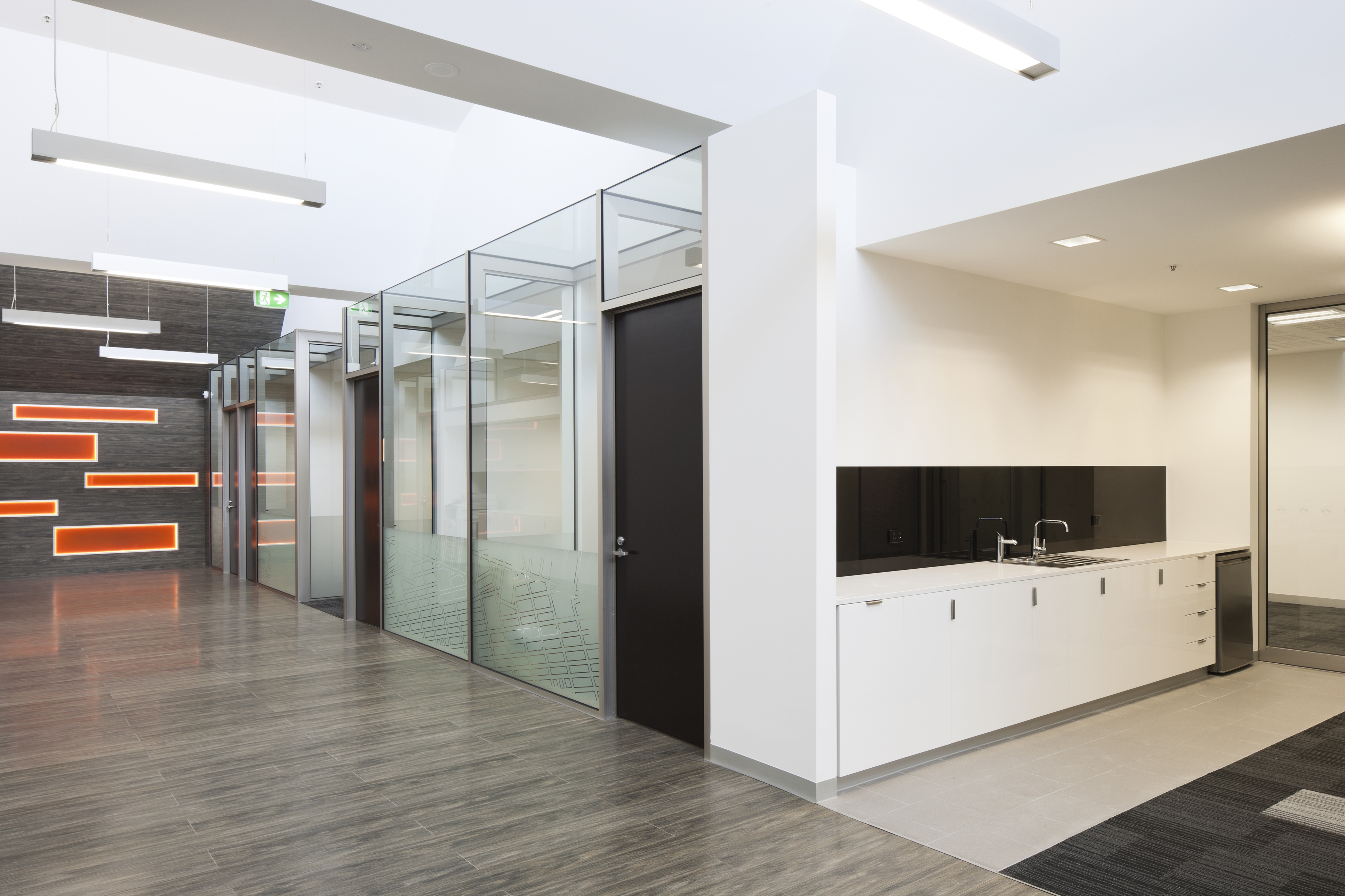
A playful use of the iconic hook turn graphic in the entry lobby reminds one of where they are “in Melbourne”.
Design Challenge
The design is representative of the relationship between Silver Top Taxis and the City of Melbourne. A metaphorical grid of streets and lanes and open space is evident in both elevation and plan, in an industrial aesthetic specifically relevant to its Collingwood location. The architecture and interior design embraces the cultural, industrial and transport heritage of Melbourne. The exterior and interior design takes its cue from the city’s Hoddle grid with its wide streets, boulevards and parks; translating them into circulation spines, offices, open plan work areas, courtyard and terraces.
The external materiality of the building comes together with the grey tone terracotta tile systems to marry in with the existing red terracotta brick warehouse shells without mimicking their colour, texture or form. A series of bold coloured aluminium hoods provide shade to terraces and windows and provide a strong visual marker to signify presence on the street. The sawtooth roof form references the industrial context and brings southern light deep into the interior and provides a sense of space, light and volume in the interior space.
Colour is an integral element in the design and is used extensively from the ever present yellow and red façade, to the soft greys and warm natural tones of timber floors, walls and ceilings.
Sustainability
Sustainability has been integral to the design, from the innovative approach to internal environmental quality, through to the selection of materials.
Key sustainability features included the removal of historical industrial decontamination on the brownfield site. Rain water is harvested for toilet flushing and terraces and hoods to executive offices reduce heat load along the western façade.
A saw tooth and translucent façade infuses the interior spaces with natural light and air.
Architecture - Commercial - Constructed
This award recognises the design process and product of planning, designing and constructing form, space and ambience that reflect functional, technical, social, and aesthetic considerations. Consideration given for material selection, technology, light and shadow. The project must be constructed.
More Details